 By ax80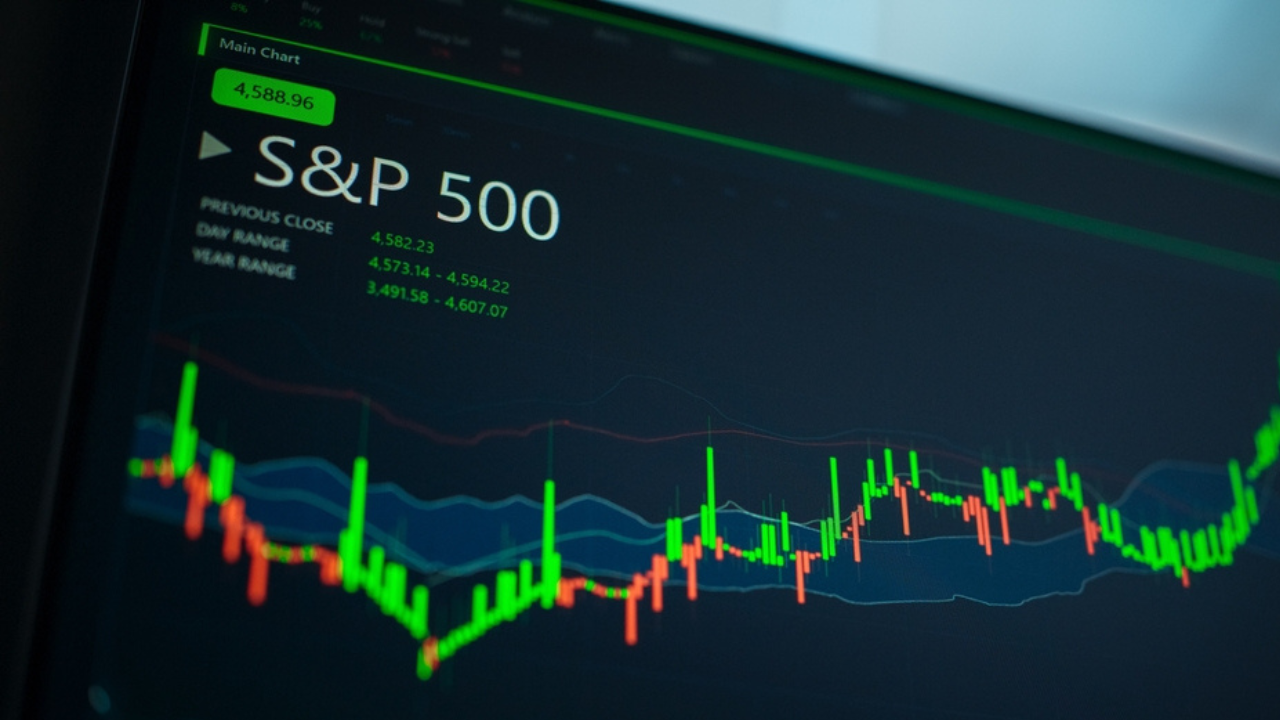
The S&P 500 remains the world’s most watched stock market index, representing the performance of 500 leading publicly traded companies in the United States. For traders in 2026, accessing this heavyweight index requires a platform that combines speed, transparency, and advanced analytical tools. Riverquode has established itself as a premier destination for those looking to engage with the S&P 500 through Contracts for Difference (CFDs).
This guide explores the strategic advantages of trading the S&P 500 on the Riverquode platform and provides a structured approach for market participants.

image source: Riverquode indices
Why Trade S&P 500 on Riverquode?
Trading the S&P 500 (often listed as US500 or SPX500) on Riverquode offers distinct advantages over traditional equity investing. Because Riverquode facilitates CFD trading, market participants can speculate on price movements in both directions—rising and falling—without owning the underlying shares.
Key benefits provided by Riverquode include:
- Flexible Leverage: Traders can optimize their capital efficiency with competitive leverage ratios.
- Deep Liquidity: Riverquode ensures that orders are executed with minimal slippage, even during high-volatility events like FOMC meetings or earnings seasons.
- Low Spreads: Cost-effective trading is a priority, with tight spreads on the S&P 500 allowing for better profit margins.
Getting Started: The Step-by-Step Process
To begin trading the S&P 500 on the Riverquode platform, traders follow a streamlined, secure process designed for professional-grade execution.
1. Account Setup and Verification
Participants start by registering an account on the official Riverquode website. The platform prioritizes security, requiring a standard verification process to ensure a safe trading environment for all users.
2. Market Analysis with Trading Central
One of the standout features of Riverquode is its integration with Trading Central. Before placing a trade on the S&P 500, traders can access:
- Technical Insights: Automated analysis identifying key support and resistance levels.
- Analyst Views: Professional perspectives on the likely intraday or swing direction of the index.
3. Executing the Trade
Once the analysis is complete, traders locate the S&P 500 within the Riverquode terminal. The platform supports various order types, including Market Orders, Limit Orders, and Stop Orders, allowing for precise entry into the market.
Strategic Tools for Index Trading
The S&P 500 is highly sensitive to macroeconomic data, such as inflation reports, interest rate decisions, and tech sector earnings. Riverquode provides the infrastructure needed to navigate these catalysts.
Real-Time Charting and Indicators
The platform features high-performance charting software. Traders can apply over 50 technical indicators, such as Relative Strength Index (RSI) or Moving Averages, to identify the momentum of the S&P 500.
Risk Management Protocols
In the volatile world of index trading, capital preservation is paramount. Riverquode empowers traders with:
- Stop-Loss Orders: To automatically close a losing position at a predetermined price.
- Take-Profit Orders: To secure gains when the index reaches a target level.
- Real-time Margin Monitoring: To prevent unnecessary liquidations during market swings.
Diversification and Portfolio Balance
While the S&P 500 is a powerful tool for growth, Riverquode encourages a balanced approach. Traders often use the index as a benchmark while diversifying into Forex pairs, Commodities, or other indices like the Nasdaq 100—all available within a single Riverquode account. This multi-asset capability allows for sophisticated hedging strategies against US market volatility.
Conclusion: Professional S&P 500 Trading
Trading the S&P 500 on Riverquode in 2026 is defined by the marriage of institutional-grade technology and user-centric design. By leveraging the platform’s transparency, integrated analytical tools like Trading Central, and robust execution engine, traders are well-positioned to navigate the complexities of the US equity markets.
For those seeking a disciplined, data-driven environment, Riverquode provides the essential framework to trade the S&P 500 with confidence and precision.
Frequently Asked Questions (FAQ)
1. Can I trade S&P 500 on Riverquode with leverage?
Yes, Riverquode offers the ability to trade the S&P 500 using leverage through CFDs. This allows traders to gain larger exposure to the index with a smaller initial margin. However, it is important to remember that while leverage can magnify profits, it also increases the risk of potential losses.
2. What is the best time of day to trade the S&P 500?
The most liquid and volatile time to trade the S&P 500 on Riverquode is during the US Market Open (New York Session), typically from 9:30 AM to 4:00 PM EST. During these hours, spreads are usually at their tightest, and price movement is most significant due to high trading volume.
3. Does Riverquode provide analysis for S&P 500 trading?
Riverquode provides integrated access to Trading Central, a world-class analytical tool. This feature offers automated technical analysis, market signals, and identified support and resistance levels specifically for the S&P 500, helping traders make data-driven decisions.
4. What is the minimum position size for S&P 500 on Riverquode?
Riverquode supports various account types that cater to both retail and professional traders. The platform allows for flexible position sizing, enabling traders to manage their risk exposure according to their specific account balance and trading strategy.
5. Are there fees for trading S&P 500 on the Riverquode platform?
Riverquode is known for its transparent pricing model. While trading the S&P 500, costs typically come in the form of competitive spreads and potential overnight swap fees (if positions are held open past the market close). There are no hidden commissions, ensuring traders can calculate their costs accurately.